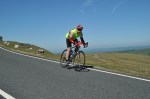
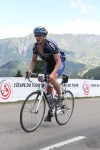
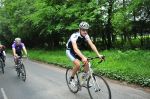
Marmotte Stories….Nick Saunders

This slideshow requires JavaScript.

Back in December 1985 I visited London with my mum – bear with me, I’ll get back to this..

I was 18 and, not knowing what I wanted to do and having decided not to go to University on the grounds that I had suffered from a serious lack of revision for my A Levels I had to enter the grown up world of work. My first job at the DHSS Bournemouth involved opening post and filing it away in cardboard files kept in large filing cabinets. The pay was a heady £3k a year and the highlight of the day was being able to see my sister who worked on the floor above, and visit the bakery to buy lunch. Although I had to sign the Official Secrets Act I can tell you now that there was nothing about the job to get an 18 year old excited at all! I quickly decided that this wasn’t for me and, after a few weeks, moved up to the lofty rank of Junior Cashier Clerk at a local Finance House. This was much more fun (and a bit more pay – £4.5k p.a) working with great people but still left me with a hole in fulfilment and the dawning realisation that Paul Weller had been right when he wrote “When You’re Young” about how quickly and inevitably the vibrant and angry young man in us all becomes swallowed by the machine which is society. So, as you do, I increased my spending on beer (and my waistline) and turned my mind to thoughts of times when I had enjoyed doing other things…and re-discovered cycling through a friend of my mum’s Duncan Connell (much talented, funny and much missed –   a true gentleman) and the local CTC (Cyclist’s Touring Club, or as we in the know called it “Café to Café”…). As I pulled my then not insubstantial carcass up the hills of Dorset, with Duncan twiddling a ridiculous 28 x 34 (the 28 on the front) Granny Gear (no compacts or triples then – Duncan made this himself!) I remembered being younger and lighter and riding the roads around Leeds. And regularly seeing the legend that was the late Beryl Burton, World Champion, mile-eater and all-round good Yorkshire lass. So back to the London visit and there in a bookshop was Beryl’s autobiography Personal Best. After persuading mum that this would make a suitable Xmas present for me I failed to persuade her to let me read it on the train back but had to wait until Christmas day to read about her exploits.

In the book she describes a training regime that would leave all but the hardest men completely broken and it certainly inspired me to ride my bike more – the central message seemed to be “if you want to get fit do miles – lots of ’em!”. The philosophy still fitted with most people I met at the time – get out and do 100 miles on a Sunday and you’ll get fitter. Well, we used to. And I did. But there were lots of stops. And it was great fun but got a little slow. Oh, and I didn’t get much thinner…

The other message in her book was a little less explicit but involved Beryl saying in the transcript of an interview that “fitness to me is speed on a bike”. Beryl, of course, used to ride a lot of track and mixed her racing up. When she trained she rode hard and she liked to talk in miles but then she could do 100 of them in less than 4 hours.

Riders still talk of miles spent training but this is a lot less common. Now riders tend to talk about the number of hours spent on the bike. Anyone who, like me, has ridden the hilly roads of West Yorkshire will know that 3 hours there could be 15 miles less than 3 hours in a flatter part of the country but a good deal harder! The advent of heart rate based training also brought another metric to the table and now with power meters as well it is a lot easier to monitor and plan your training time efficiently.

Which leads me onto this post, and many apologies for it being delayed (not only by my pre-amble!).  The post is a story from this year’s Marmotte,  a sportive undertaken by a number of my riders and written about here by Nick Saunders. Nick is, like most of my clients, time-poor with a young family and a busy work life. He has improved amazingly on limited training time due to hard work and continued dedication. His hours in the saddle leading up to this event have been less than many riders he has spoken to yet his results speak for themselves. The words in italics are mine, the rest is Nick.

Building to the Marmotte

At the beginning of 2012 I decided to start getting serious about my fitness. I had being playing football regularly for quite a few years but had found maintaining fitness a struggle as my life became more and more complicated with both work and family pressures. I had been doing a limited amount of running but found that motivating myself to get out on a cold dark winters night virtually impossible. A new direction was needed, something which would not only motivate me into getting fitter but would also give me the desire to train harder than I had been able to do before. That new direction was going to be cycling. I had bought a road bike during 2011 but did not use it until January of 2012, but only on a turbo trainer. I followed several plans but quickly realised that if I was to maximise my training given the time I had to do it in I needed something with more structure and purpose. I also needed a driver that would motivate me into training regularly week in week out. I came to realise that a coach who could provide plans, advice and feedback would tick all the boxes for me. I sought out the Association of British Cycling Coaches and began the process of getting more information from the coaches listed in my area first. I rang Tim Ramsden of Black Cat Cycle Coaching and had a long and informative chat with him. I talked about how I wanted to get fitter but was struggling motivating myself and felt cycling would give me renewed impetus. Also how I found it difficult to motivate myself to train and how a ‘paid for’ plan could provide the necessary reason to get out and train. Lastly how my time was limited so I needed to get every ounce of benefit every time I got on the bike. I then listened as Tim went through the various options he could provide and how he could help me. I took Tim’s offer of a weekly plan and feedback via email. I also booked a RAMP test with him to give us both some information as to my starting levels of fitness which would also give us an idea of the direction the training should take. I had decided that my goal for that year would be to enter monthly Sportives of a gradual distance building up to a 100 mile event in October 2012, this was my goal for that year and the training plans Tim would set would be with this goal in mind. The training would continue into 2013 with the goal being La Marmotte, a cyclosportive set in the French Alps. La Marmotte is widely regarded as one of the hardest Sportives in Europe covering 180km and taking in 4 major mountain climbs which added together amount to around 5,000 metres of ascent. A major undertaking but one I felt would be the ‘driver’ in getting me to complete Tim’s plans.

So it began, with gradual mileage and steady Heart rate sessions. Remember, I was coming into this from virtually ground zero so had to take things easy at first and keep building. All Tim’s plans for the week had a turbo alternative if weather or time prevented training on the road. I quickly became used to riding in specific heart rate zones through specified intervals all with the aim of increasing my threshold. In terms of time spent on the bike I was finding that I was training for 3 or 4 days or sessions during the week and once at the weekend. As we came into the summer I began to up my time training as I was able to commute to my main office which was around 16 miles from my home and then ride back in the evening and even extending that ride home to 2/2.5 hours. Notice I say time on the bike and not miles. This was because the focus is on getting the maximum out of your ‘time’. So mileage was never an issue it was all about quality and focusing on intensive and well constructed sessions. By the summer I had also finished playing football and made the decision to limit my playing the following season to maximise my training. The training was beginning to pay off and I found I was motivated and training hard and I was getting fitter and faster.

My schedule of sportives was well under way and by September I had completed an 80 mile event and was looking ahead to the 100 miler the following month. By now my training had increased so that I was riding each day on a weekend and having only 2 days off during the week with plenty of extended rides on my way home from my office. There was still no mention of mileage but still time spent in the saddle with measured efforts, now including sprinting intervals, built in. I completed the New Forest 100 in October in a silver medal standard time of 5.30hrs and went into the autumn having achieved my objective for 2012 and, more importantly, I was still enjoying the training and was pushing to do more. Having Tim’s plan’s really kept me focused so that I had to plan carefully my week ahead so that I could maximise time spent at work, with the children and on the bike. Around this time I had a second RAMP test from Tim and the results were amazing. I had increased my power output sustained for 1 minute by 60 watts (This is often referred to as MMP Maximum Minute Power or MAP Maximal Aerobic Power. It is the average power recorded during the final minute of a RAMP test to exhaustion. You should also hit your max heart rate around this time before the man with the hammer taps you gently on the head and shouts “Stop, you fool!” From these figures it is possible to set heart rate and power-based training zones. It also correlates well with a 3 minute maximum test after a good warm-up.) so I was definitely heading in the right direction. However I now had a winter to get through and with the dawning of 2013 the Marmotte was now on the horizon.

The winter proved hard mainly because the training was now being done predominately on the turbo trainer with rides at the weekend when the weather allowed. This is where the plans came in useful to give structure to the week but in the end it did require a certain amount of self motivation to get the training in through those dark winter months.

With the spring arriving I started to look at racing and in particular the local races to me run by the South East Road Racing League and the LVRC (The League of Veteran Racing Cyclists). This meant a slight change in emphasis on my training but still having great benefits for the upcoming Marmotte sportive (Contrary to what traditional training models prescribe, shorter race-paced training will also bring increased performance over longer distancesa lot of riders do too much training, regularly doing slower, over-distance rides as part of their training. These are sometimes described as recovery rides even when the ride is over an hour and in a HR/Power zone which is too high for recovery). I continued with my commutes and extended rides but now there were more sprint intervals and also training with a fast bunch at a local outdoor circuit. The aim now was to work towards handing burst of very high intense efforts whilst also pushing my threshold higher. I found that the sprint intervals involved a quite intricate set of instructions from Tim’s plans and that these were not suited to the various disturbances met when riding on the road. Again I took these intervals to a quiet long stretch of road and simply went up and down on what amounted to a 1 mile stretch of road. With the interval instructions taped to my stem I could push hard without fear of meeting traffic lights, road junctions or other disruptions. I was also now starting to increase my rides at the weekend to around the 3 hour mark, my training diary was now showing an average of 9 to 10 hours a week training. The racing was a baptism of fire not only in terms of the speed but also of how to handle yourself in a race that involved several sharp corners. I was now seeing why the sprint training was necessary. High intense efforts over a 50 mile race were very taxing and my first few races did not go well. I was starting to feel some improvement when, however, the date for the Marmotte was just now around the corner, so the racing was put on hold to avoid any injuries that would put a serious dent in completing it!

Prior to me setting of for the Marmotte I discussed with Tim nutrition both pre ride and during the ride. We had talked about this throughout the year and had got a system which worked but had never been tested to such extremes that you meet on the Marmotte with the heat and amount of climbing being the main issues.

The Marmotte

On arrival in Alpe d’Huez, which was to be our base for the next 4 days, the amount of cyclists around the village was an amazing sight as was the weather being very hot even at altitude. The Friday allowed us to have an easy run out and we took the opportunity to scout out the route the Tour de France will take after it climbs up Alpe d’Huez for the first time. After a 25 miles of easy pedalling in the valley I tested my legs by climbing the first section of the Alpe up to a small restaurant at La Garde. This is about 4 hairpins up and regarded as the toughest part of the climb. It was great to test the legs on this short section and gave me a brief sample of what to expect on Saturday and in the Marmotte proper. However there would be a major difference climbing after nearly 7 hours in the saddle as opposed to just over an hour.

Saturday, day of the race, started early around 6am as we ate a good breakfast. We then got all our kit ready and bikes on the car in preparation for the drive down to Bourg d’Osians and the start. Our start time was 7.50 and with start numbers of 6024 we would be starting at the back. You are timed from the moment you cross the line measured by a transponder on your bike so being at the back would not be too much of a problem. Once underway there is 10km straight road down to Rochetaillee were we turned right and continued what was a fast pace in a mass group to a dam at Allemond. I was able to move up the pack fairly comfortably as this section of the course is closed to traffic and the road is fairly wide. However, as we rode up and past the resorvior behind the dam,  the road narrowed and the climb up to the Glandon began. The paced slowed as we started the 24km climb up to the Glandon and moving up through the mass of riders was proving difficult but it did mean that I was able to pace myself. The Glandon is measured at 5% and is relatively easy in places and its every easy to get carried away and forget there is plenty of harder climbing to come. So I maintained a steady pace to the top. I crossed the timing mat on top of the Glandon in good shape. It felt good to have got the first climb under my belt and took the time to have a quick drink and a toilet break and of course admire the view. Although the descent is not timed some people were absolutely flying down and it was no surprise to see the ambulances going up and down and I did see one rider lying on the floor with paramedics around him, hope he was ok. The ride down to the valley floor was quite technical in places but on the whole was really enjoyable and as we turned onto the flat roads at St Etienne de Cuines the heat was really starting to build and this long false flat was open to both the heat and wind. I got into some fast groups and it didn’t seem any time at all before we turned right at Saint Martin d’Arc and began the ascent of La Galibier. The first part of La Galibier takes you up to the top of the Telegraphe which tops out at just over 1500 m with a gradient of 7%. This climb is around 7km and has some hard sections. The road is now being used by cars which narrows the road so again moving up is tricky at times and already some riders were finding the going pretty hard and were stopping by the side of the road in the shade. There is a descent after you come of the top of the Telegraphe which is pretty fast and takes you onto the climb of the Galibier proper. The first part of the Galibier is a long drag where you can get into a rhythm and just grind it out. It was still very hot even on the upper slopes of the Galibier at over 2500m. As you turn and cross the valley the climb really begins in earnest: I now I started to feel it. I kept looking up to try and see the summit but gave up as it never appeared it just went on and on. I had to dig in here as we reached the switch backs. I was,however, going past more people than were passing me, something I managed through the whole event. Pacing for me was quite simple as my heart rate monitor was playing up so I just trusted my body and went at a pace I was comfortable with, I never gave chase if someone passed me and tried to keep my cadence constant. Topping out on the 18km climb to the Galibier I didn’t hang around. My parents were waiting at the restaurant over the back with some food and drink and I was desperate to get there. After a quick drink and eating stop courtesy of my parents, who had travelled down with me, I continued the long descent back down the valley to Bourg d’Osians. It was brilliant to get some rest whilst descending but found I was getting cramp in my legs so had to keep them moving and even get them out of the pedals and shake out any cramp. I was slightly worried that the cramp would return on the climb up the Alpe but in fact I found it easier to keep moving. The heat slowly built up as I dropped of the Galibier until with the wind it felt like someone was holding a giant hairdryer in my face! As I hit the valley floor there is around a 20km drag down to Bourg d’Osians which although was downhill was into the wind. I sat in a group and moved at a reasonable pace. I could have gone on my own but I wanted to preserve all the energy I had left for the climb up Alpe d’Huez. Up to this point I had been trying to consume an energy bar and a gel an hour, drinking water and an energy drink constantly as well. I filled up the bottles when I came to a convenient water stop. All the talk of mass queues was slightly misleading. There were plenty of people at the stops but getting water and food was not a problem. The problem now was the heat. Going down the valley road to Bourg d’Osians was unbelievably hot so I was especially pleased to come to the roundabout at the entrance to the town and see the next water stop. The crowds here were amazing cheering on all the riders and part of me wanted to charge through the throng and on up the Alpe. Instead I pulled in and took on some water and some food and contemplated the climb ahead. It was then time to climb back on the bike and begin the final climb of the day and in some ways the hardest. I made it to La Garde, the same point I had climbed to yesterday, and was feeling ok. I was moving slower than the previous day but I as I had thought this was a lot different. I was getting into a rhythm and was steadily making progress when the heat really started to bite. All around people were stopping and taking a breather, some were even walking. What made it worse was the sight of riders who had finished and were now riding back down the Alpe. As I approached the church near Huez village there is a water stop and although I had plenty of water with me the opportunity to throw some over my head to cool me down was too tempting so I stopped. I gulped down a cup of nice cold water and then went to the hose pipe and re filled the cup and simply poured it over my head. This did the trick and off I went again. It’s at this point you can see the ski station above you and the end is in sight, even if there is still plenty of climbing to do. I ploughed on and on trying to keep my speed and cadence constant. I had forgot to keep a check on the numbers on the bends so when I did glance across to see I was going round bend 2 I was instantly lifted and even started to up my speed. I rounded a small group and was now on the final climb up into the ski station. I suddenly felt stronger and pushed harder up into the station going past the riders who had finished and were now having a nice cold beer in the bars that sit aside the road into Alpe d’Huez! Rounding the corner and going under the bridge I went past the hotel I was staying at –  I was now less than 1km from the finish. With this knowledge I got out of the saddle and went for the line. I know it’s not a race and but I just wanted to get it over with! I could now see what Marco Pantani meant when asked why he always attacked going up the mountains: his reply was that the quicker he got to the top the quicker the pain would stop. Dropping down into the finishing straight you have to negotiate a roundabout and then funnel into a narrow lane which marks the end, you’ve made it! I got myself together and went to get my time and was delighted to find I had completed the course in 8.16hrs which for me was a gold medal time. So in the end the time spent training in the cold, rain and on the turbo was worth it. Could I have done the training on my own according to my own plans and regime? Possibly. However, I knew that I needed exactly what a set and structured training plan devised by a coach would give me and it worked. The painful memories of climbing those mountains are now starting to subside so my goal for 2014 could well be to go back and to go quicker!

..and that’s the whole point, isn’t it? I should say here that the only concession to longer rides Nick made was in the 3 week period before the Marmotte where he was able to take some time off work and string together 3-4 days of longer rides. Nothing, however, approaching 8 hours at any time.
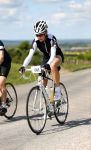
It’s July again…….Etape du Tour (2) plus the Marmotte!

….and the Tour rolls out again! And sportive riders turn their thoughts to the two “Giants of the Road” in the form of the Etape and the Marmotte.

Both these events are brutal and take a rider months of planning, preparation and, of course, training and recovery to get to. Nutrition plays a vital part in a successful ride as does an effective pacing strategy.

This year a number of riders whom I coach are attempting one or the other of these events (but not both, though there are some sportive junkies out there who are attempting the weekend double!) and this Saturday (Marmotte) and Sunday (Etape) will see them at the end of a training taper, having carbo loaded and taped their schedule to the handlebars so to speak (in this age of sat nav and altimeters probably not necessary anymore…). I am lucky enough to know that at least two of these brave souls will contribute to this blog once they have got their breath back. But, in no particular order, I would like to wish the following the very best of British:

Nick Saunders (Marmotte), Mark Davies (Marmotte), Vicki Lee (Etape and on 10 weeks Wattbike training and double daily sessions doing reps up Swain’s Lane!), Tom Sandifer (Etape and I think he wore his turbo trainer out getting to this point – what an animal!), Rod Archibald (Etape after a nice Barcelona to Biarritz warm-up!) and, last but not least, the daysleeper himself Chis Hursey (Etape).

Chapeau to all – watch this blog for their stories next week! Oh, and if YOU want to take up this challenge next year then why not start planning it now? Email me if you want some help going faster – tim@blackcatcyclecoaching.com – and watch my Facebook page and this blog this week for news of the first BlackCat Training Camp in the sun 2014 with Ciclo Costa Blanca!

Ready to go? Your warm-up counts!

1988. HMS Daedalus, RN base, Lee-on-Solent. Thirds and juniors road race around part of the runway. Short triangular circuit, 3 very sharp corners. The kind of corners you have to slow right down before you get to, while choosing (carefully) the right gear to accelerate out of. The kind of corners that put you into all sorts of agony if you aren’t ready for them……….

I arrived at this circuit with my mate. Neither of us had ridden there before but had been told that the wind was the main problem and that the circuit was wide and the corners didn’t present a problem as the circuit was a large rectangle. True, but that was for the 1st, 2nd and 3rd category race. Not the 3rds and juniors (I should explain at this point that before British Cycling introduced the 4th category 3rd was the bottom one and organisers used to put two events on – one for 1st, 2nd and 3rds (this was longer) and one for 3rds and juniors (shorter and everyone had to ride restricted gears – 52 x 15 maximum). It was often perceived that the 3rds and juniors (3J) race was easier. This wasn’t always the case – around this time in the Wessex division you had Juniors like Mark Armstrong (VC St Raphael – went on to become National Junior Road race champion), Scott Wheeler (Poole Wheelers – not sure what happened to him but he used to be in the same league as Armstrong) and a host of others. Also coming up at that time was Dave Rand (CS Purbeck) who went on to win the National (Senior) Road Race Championship. Apologies for anyone who I missed here. Anyway, all of these riders could show this particular coach a clean pair of wheels within seconds of the race beginning.

And so was the case in Lee-on-Solent. “No warming up on the airfield”. Security. So the warm up was, I think, around 5 mins or so. Result? The inevitable……….dropped. Lapped. And again. And retired. We couldn’t even leave the base until everyone had finished. Security.

So…….warm-ups! Do you need one? If so what? How long? How hard/easy? In this post I will attempt to give you an idea of what you can do for specific events. And you could try a new method – but only do it firstly in a race that isn’t important to you just in case it doesn’t work for you!

Warm-ups are, I would argue, event-specific. If your event is a 120 mile sportive then it is likely you are going to spend a great deal of time waiting to start in a holding pen and, unless you are going for a super-fast time, you are probably not going to start a bloc (full gas) but spend a few kilometres getting into the swing of things. Add the complication of doing this abroad with 6000 other people in a small town start and you have limited opportunities for any of the warm-up variations detailed later. So, turn your legs round as much as you can as you pedal to the start (having hopefully done a recce of some of the route a couple of days earlier).

Road races are different. If it’s on open roads you usually have the luxury of doing a lap (or part of a lap if the laps are big) of the course. If it is a circuit race (closed circuit) you may well not get this opportunity (especially if there are other events on the same day) so you should bring a turbo or rollers.

Road races need differentiated warm-ups depending on the type of event. I would contend that a long road race (2 hours plus) needs a progressive warm-up through 60% max heart rate (MHR), going onto 85% MHR over 10-15 mins. Then some harder (near your max) 10s efforts (preferably up a hill on the course) with 1 min between each one (say 4 efforts). This is probably enough, then pedal to the start and keep warm until the last moment, taking your jacket/leg warmers off then. Criteriums (like the Lee-on-Solent race), however, can go from the gun so you should do the warm-up above (on a turbo) and also include some (2-3) efforts @90% max HR over 1-2 minutes (with equal time between efforts pedalling easy, 1 min on, 1 min off for example) before the sprints – these should be 6s (maybe 4 of them) and have 20s between them pedalling easily. Then a steady pedal back at 60% MHR and up to the start line. I would also recommend this warm up for cyclo-cross – these races always go from the gun.

Time trials should, again, be differentiated based upon distance. The longer the TT the less of a warm-up is needed (think long road race).  But for 10 and 25 mile TT’s the Criterium warm-up is useful, with the 1-2 min efforts being at the intensity (heart rate or power in watts) that you aim to sustain in the race. The 6s sprints should be in medium gears and precede the 1-2 min rolling efforts.

Track racing is more complex given the type of event you will be riding but for a track league meet where you may well be riding 4-5 different events a similar type of progressive warm-up is desirable (more difficult on fixed gear and rollers) where rpm is used to increase intensity. Warming down between races/heats is also very important to prevent stiffening up. You will also often see riders at World Cup meets heading out of the velodrome on their road bikes to warm down. In a recent competition I noticed riders using Wattbikes for this part of their preparation track centre.

Riders like myself who have reached veteran (cruel word, isn’t it? I mean, can’t they think of a nicer term? How about you do? Find me on Twitter @timblackcatcc and tweet me your ideas!) status need longer to warm up. Add another 10 minutes reasonably fast (90-100rpm) pedalling working the HR up to 60%MHR first.

Don’t forget the almost maximal sprints in the warm-up – I advise my clients to do these mid-cassette or lower. The idea is that you “wake-up” the fast twitch fibres and recruit them for the effort you are about to make.

So – if you don’t warm-up like this, give it a go. If you are always dropped at the start of a fast race then try the Criterium warm-up. Whatever you do, get to know the sensations your body gives you in the first part of an event. You will learn how to “open up” your throttle without damaging yourself if you practise warm-ups in training and training races.

One photo today is from the start line of  a recent race (circuit race) where this coach arrived late and didn’t warm up enough. I was doing some team work for clubmates and got carried away, trying to get up to a break. Result? Yup, you guessed it, 1988 all over again although this time I was able to limp off home early…..the start line photo shows one of my clients, Rich McVey, who was also riding in the 1980’s but was winning races rather than climbing off in them. Rich attends my turbo training sessions in the winter, does testing with me and has me write training programmes for him which he attempts to fit in between his incredible amount of racing (usually 5 days a week when he isn’t working nights…). He also warms up diligently and is never dropped on the first lap and so I have pleasure in including a couple more action photos of him here. Incidentally, Rich’s dad Pip McVey is 80 and still beats 30 minutes for a 10 mile TT!!!!!!!!!!

The Prudential Ride London 100 – A rendevouz with Box Hill!

Those of you who watched the Olympics last year (so that’s pretty much everybody, unless you managed to get one of the seemingly mythical “great deals on a foreign holiday while everyone else is glued to the plasma screen”..) will remember the cycling road race for some great rides and exciting racing.  Lizzie Armistead’s silver medal ride in the rain was, for me, one of the stand-out rides in recent years. Up against the undisputed best rider in the world, Marianne Vos, Armistead proved that she is an all-rounder and a formidable talent. Like Nicole Cook in the Beijing Olympics 2008, Armistead again showed that women’s racing is every bit as exciting as the men’s, and getting faster too!

Cav’s ride in the road race prompted a lot more discussion about team tactics and the, quite frankly, dubious winner! However, as most people said at the time, which nation was going to drag the fastest sprinter in the world over the course only to have him beat your sprinter by a country mile at the end? That, unfortunately, is road racing, negative or not….

A bonus of the Olympic legacy is having the opportunity to ride the road race course and conquer the legendary Box Hill in the Prudential RideLondon 100 http://www.prudentialridelondon.co.uk/Prudential_RideLondon___Events/Prudential_RideLondon-Surrey_100.htm

This challenging ride also  features the opportunity to ride on closed roads (Wow! Closed roads for a cycling event in Britain! How far cycling has come…) in the hours before the Professional race comes through. This makes it a battle against the clock for most people, with a maximum time of 9 hours allowed.

To put this into context, Marianne Vos rode the women’s race at 26.9 miles per hour for just under 87 miles.  The men’s road race over 155 miles was ridden at an average speed of 26.09 mph. Now doesn’t that make you feel a little inadequate? BUT for anyone who is riding an event for a time (that could be to beat your previous time or just to get round in the cut-off time) the effort level to reach your goal is the same – 100% over the distance. Now clearly that doesn’t mean start at a sprint, do the first 200m like Jason Kenny then slow to 7mph for the remaining 99.whatever miles…no, you have to pace correctly based upon what you know about your own limits and this has to be set in training. Even experienced riders can get carried away when they are in an event of this size – jump on a fast group at 15 miles in, hammer the hills like you’re Nibali, experience that “legs beginning to feel like lumps of wood” sensation at 60 miles then limp home after numerous re-fuelling stops. So…what’s the answer? Well, don’t get too carried away and try everything out in training – nutrition, climbing strategy, heart rate strategy, equipment and clothing, everything!

This year I am pleased to be helping a number of riders towards their goals in this particular event. One is Ben Connelly and he has been very kind in making this contribution to the blog. Ben is riding for a charity close to my own heart – they helped his Dad when he was young as they helped my Mum when I was 22. If you want to help Ben raise funds then his page is here http://www.justgiving.com/BenConnolley

Ben will be contributing again to the blog nearer the event – here is his diary to date and I hope it helps those of you who are reading this post and toying with the idea of riding a long event!

This slideshow requires JavaScript.

In the summer last year, I watched an advert on TV for the first ever RideLondon event. Feeling pretty lazy and, if we’re being honest, overweight, I decided that I needed a challenge. Before I knew it, I’d registered, selected a charity to ride for that was close to my Heart and I was in! I’d signed up to ride 100 miles on a modified version of the Olympic road race course in August.

The confirmation of a place came at the end of February and I decided that, if I’m going to tackle this properly, bike fitness needs drastic improvement. I put together a 4 month training programme that I felt would work. However, with little knowledge of putting together a structured plan and knowing the finer details of training with a turbo trainer, I thought it best to send it to Tim at Black Cat Cycle Coaching. As I had thought, the plan needed work!

Firstly, I needed to know when I could train and what the best type of training was for me. The first session of course, was to find out what my maximum heart rate was – that was an interesting session! It wasn’t long before Tim sent over a structured programme that fitted in with a busy work life and enabled me to work to a structure that was tailored to me.

Being a guy who likes his gadgets, and one who my father always though had too many fads, I decided to treat myself to a few toys to help the motivation. Although pricey, I bought a Garmin 500 that spits out all the stats you need and has really helped focus me on the particular training session I’ve got on the go. I then get to bore my wife with the graphs showing heartrate and cadence etc! She tells me it’s very interesting!

So far, I’m about 4 weeks into the training programme; focussed on 2 interval training sessions on the turbo trainer on weekday evenings and a weekend ride. Already I’m noticing the weight drop and having to work a little harder to get my heartrate into a particular zone. It’s an amazing feeling heading out at the weekend feeling as though it’s really paying off, spurred on by the stats on the Garmin and the fantasy that I might, one day, become a pro! My dad also thought I was too much of a daydreamer!

Initially, I found that a stressful day in the office and a long commute didn’t help the programme. I had to make a conscious effort to stick with the plan. Without a structured plan I think my training may already have come unstuck due to time pressures of my work life. However, having turbo trainer sessions that satisfy my training needs and are around an hour long enable me retain a bit of an evening with my wife too. As time goes on, I know some people say that turbo training can be boring, but working to a structured plan really works for me. I can already feel that I actually want to get on the trainer and train!

The first phase of the training plan is almost complete – I’m sure there’s a lot more hard work to come. But, I’m really enjoying this!

Let’s see how the next 4 weeks go!”

Time poor? Then HIIT the pedals hard!

“Hi Tim, I have entered the Etape/Marmotte/Dragon Ride next year and have just bought a bike and turbo trainer. I have a heart rate monitor and a computer and am really keen to get a Silver standard for my age group. There’s just one problem……I have a full-time job with a 50 minute each way commute by train, two children who have an active social life doing after school clubs, parties, swimming, horse riding etc AND I have a very understanding partner who may not understand any more if I have to train for 12 hours a week!”

A fairly typical enquiry for www.blackcatcyclecoaching.com ! Cycling, quite rightly, is the number one fastest growing physical activity choice for adults in the UK. I was in London recently and was totally blown away by the amount of people riding near Richmond and Kingston on a Sunday. Beautiful bikes and fabulous jerseys everywhere! For someone who was attracted to the sport as a boy by the colours and the “difference” to what I saw as the “greyness” of football, rugby and cricket this incredible upsurge in popularity is just wonderful to see. And the events on offer! Great closed road race circuits like my own local Fowlmead Country Park (http://www.fowlmead.co.uk/) and Gravesend’s fabulous Cyclopark (http://www.cyclopark.com/) are purpose-built for cycling and cycle racing and would never have existed “when I were a lad”. The sportive scene is phenomenal with brilliant British events like the Etape du Dales and the Dragon Ride, not to mention the opportunity to ride abroad in the “classics” of this genre: again, not something that was around in my youth …though the club runs in Wharfedale had a similarly epic feel back then. I remember being 12 and riding from Leeds to Malham with my two pals before heading off-road over Mastiles Lane http://www.youtube.com/watch?v=PkYReL1Vxc4 to Grassington. This was all on sprints and Lion tubulars and I ripped 3 spokes out of my back wheel on the rough track of Mastiles. I vaguely recall ringing my parents from a red phone box in Appletreewick to inform them that I might not make it home for tea (For those of you who don’t know these roads, why don’t you pop up to the start of the Tour in 2014 and try them? Pack a compact chainset.). Ah, to have all day to ride again…Which brings me somewhat long-windedly to my point!

You want to train. You have the bike and the kit. You have limited time! You read generic training plans that say “start with 2 hour rides, build up to 6-7 hours…”. Does this work? Well, yes. BUT not if you can’t give the time over to riding. So, give up on the goal? Not necessarily. I have been telling anyone who will listen for a long time now that you don’t need as much time as you might think. Even in this information age where answers are as easy as a touch of a button, cycling (and cycle racing in particular) is still steeped in tradition when it comes to training. It’s hard not to get dragged along with it and, as I said previously, you can do it with good conscience if you have the time to devote to it. So, an alternative? I’m a big fan of HIIT (High Intensity Interval Training), researched and promoted by Dr Ross Lorimer and Dr John Baraj. Look them up and you will see their research. Or you may well have seen the Horizon programme fairly recently which detailed this form of training and the effect it has upon sedentary and trained individuals. My own opinion of HIIT is based solely upon the effect is has had on 2 of my coaching clients over the past 12 months. In short, for a much reduced volume (hours) of training, and by increasing the frequency (number of sessions) of high intensity (hard) training they have achieved the same effects on raising FTP (Functional Threshold Power – the power you can sustain for 60 minutes), MAP (Maximal Aerobic Power – the power you can produce over the final minute of a RAMP test to exhaustion) AND Peak Power (Sprinting power) as a higher volume, more traditional training approach. Less hours, same result. Oh, and as a bonus they both lost weight (shed fat) like they were training for more hours.

Now I can’t offer this as a scientific study where lots of people have been using the protocol under the same conditions etc. It is just my observations of progress made. But it really has made me think again about how to train and what is the best way to do so?

You may want to make up your own mind. Perhaps your time is limited, or you are just getting a bit stale and want to try something new. Here’s an example of what you could do using the HIIT principles (A similar programme appeared  in The Journal of Cycle Coaching issue 4 2012 – written by Drs Lorimer and Baraj and I reproduce part of it here but tailored slightly to represent the sessions my clients have been doing ).

Each of the repetitions requires a resistance load of between 7.5% bodyweight to 11-12% bodyweight (level 15-20 on an exercise bike, or a 1 in 10 gradient hill with increased gearing. Resistance on a turbo? Your top gear should feel a little over geared to start with – increase from there). I would advise you to warm up for 10-20 minutes (20 minutes if you are over 40) steadily.

Try 6 x 6 seconds flat out (seated) sprints with 1 minute rest between each one. Each repetition should be at your absolute maximum. You should experience a diminished recovery as you work your way through the reps – you should feel not 100% recovered by the end. Not hard enough? Increase the number of sprints and/or cut the recovery (max 12 reps, min 30s recovery). Want longer reps? Try 10 seconds, work up to 30 seconds ( 4 reps max, 2-3 min recoveries). These are very unpleasant indeed but the nice thing is that, according to the research, there is no benefit in making the reps any longer (or doing any more of them).

Sceptical? Already trained? Apparently research has indicated that adding 3 sessions of HIIT per week to  the programme  of a high-level athlete will elicit a substantial improvement.

Like most things, you won’t know until you try. So why not give it a go? Clearly, as with all exercise programmes, you shouldn’t undertake these intervals if your health may suffer as a result: this is particularly true of the over 40’s. Check with your GP first if you are in any doubt.

As I said before, I am a convert and by way of thanks I offer a plug to Drs Lorimer and Baraj’s publication High intensity Workout 2012, Dundee University Press. Now, where did I put my Wattbike? Time for some 10 second reps before I get the kids ready for ballet…..

Stephen Swindley racing update/ Crashes, Punctures and Mental Attitude!

BlackCat rider Stephen Swindley (PMR Toachim) is currently at University in Sheffield, combining his studies with some high quality racing. As a 2nd category (British Cycling categories – 4th, 3rd, 2nd, 1st, Elite) rider he often comes up against Elite level riders (Sheffield and surrounding area is a traditional hotspot for cycle racing in the UK). Stephen doesn’t feel daunted by this, recognising that he is on the way up and has the talent and determination to go higher. A consequence of improvement is going into another pond with bigger fish…..mentally this can be where athletes from all disciplines “break”. If you are used to winning or being in the front of the field all the time, then you suddenly meet someone who gives you a kicking it can be very poor for motivation! To illustrate the point, back in the early 1990’s I sold a track bike to a rider who was a very good time triallist based in the South West. He had ridden a very fast 10 mile TT course through the Savernake Forest  many times and was used to winning club and open events. He informed me that the last time anyone had caught him in a time trial (for those of you who don’t know, riders start at 1 minute intervals and are seeded so the fast riders tend to catch the slower ones: Alex Dowsett once caught this particular coach in a 25 mile TT – he started 13 minutes behind me…..)  had been 10 years previously. That was until a certain Mr Chris Boardman turned up in his run-up to the Hour record and produced a blistering ride, catching him for 4 minutes!! He still couldn’t quite get over this….

Another consequence of racing regularly is the advent of crashes and punctures – another of my clients Jo Van Velzen (Deal Tri) felt her spirits deflate along with her tyre at a circuit race this Saturday. Jo has an impressive pedigree in Dutch national level swimming, though, and has a stoic but determined attitude to temporary setbacks. That’s the thing with setbacks, they are only temporary. Take Nick Saunders, another client who made his racing debut this weekend. An extremely windy day and very strong field meant that it was difficult just to stay in the bunch – as soon as any accelerations come  you have to be in the right place and react quickly.  Nick was doing both of these things well but made a decision not to close a gap and became detached from the group. A moment’s inattention and that’s it when the bunch is travelling at 27-28mph. Nick recognised this – his email feeding back to me showed that he had analysed his performance and was going to learn from his mistake. Oh, and determined? No he didn’t climb off when he was dropped, he rode until other dropped riders came up (and there were lots) then raced with them. He still got his workout and didn’t miss the training. And if this happens to you in your first race? Finish if you can, do this and you beat the quitters. And if not? then the next day or the day after get back on your bike, train and as you do this look objectively at what went wrong. formulate a plan for next time and brush the incident under the carpet. Stephen has suffered a crash, as you will read, but he is back training and has shrugged it off.  Both riders are shown here and both photos, in different ways, represent the realities of cycle road racing. In fact, of all competitive cycling. Actually, when you come to think of it, of all aspects of life!

“Hi Tim,

A bit of an update on the last couple of weeks racing.

Tameside 2/3/4:

I went over to Tameside in Manchester last Sunday (7th April) for a Cat 2/3/4 criterium on a new circuit about 1k long with a few sweeping corners and a hairpin. Weather on the day was very still and mild. I attacked on lap 1 taking one guy with me, he wasn’t up to much so I was pretty much on my own. I was holding the bunch at about 10 or 15 seconds for the first 10mins or so, before a surge brought them back to me. I tried numerous times to get away but unfortunately there were too many guys in the bunch content to bring it to a bunch sprint aided by the lack of wind, making it very easy when in the wheels. I was reasonably well placed on the final lap but clipped my pedal on the second last corner, I stayed upright but my chance of sprinting had gone. Rolled over 18th.

Varsity TT:

The varsity time trial was held Wednesday the 10th, 12 miles through the peak district with long stretches of downhill but also one fairly steep 1.5 mile climb (I think around 8% average). The weather was pretty mild with a light southerly breeze meaning a head/cross wind for almost the entire route. I caught my minute man after about 3 miles, I was flying along the flat and downhill sections but laboured up the climb having to go down to 39×28 on the steepest section! After the climb was a long descent to the finish during which I span out the 11 and caught two Sheffield Hallam riders. I finished in 31:38 (22.7mph average) – this was only good enough for 6th place, which was quite disappointing. However,  only 34 seconds separated me from the winner (Tom Stewart),  a strong elite rider who won the Maureen Baine Memorial Road Race a couple of weeks ago. Also in my defence two of the guys ahead of me had TT bikes and another two had aero bars.

Darley Moor:

I got the train down to Derby again yesterday to do an E/1/2 at Darley Moor. The weather was mild again but with strong winds which play havoc as its a very exposed circuit. A strong field turned up with the likes of Dean Downing amongst them. For whatever reason the legs felt a bit lethargic I missed the main break, got in a chase group but I folded on the crosswind section only about 20m off the back of the break, just not having it in the legs. Downing won the race.

Sheffrec Spring RR:

A shortened national B road race (100km). The weather, although mild, was incredibly windy. On the way to the HQ from the train station I was grinding along the flat in 39 x 24 at times and nearly got blown off the road! A very strong field turned up – Dean Downing was there again, Herbalife, Metaltek, Sportscover, Altura etc… The course was flat but very exposed –  18 laps of a 4km triangular loop, with two crosswind sections and one tailwind. The race started hard and splintered immediately on the first crosswind section. My legs were feeling a lot better than yesterday but I was caught napping in the bunch while two breaks had formed up the road. I attacked on the tailwind section and managed to bridge to the second break. We proceeded to ride eyeballs out for about 50km and managed to bridge to the front break eventually. However a number of riders attacked as soon as we caught them and stayed away. I spent the second half of the race really suffering, although we kept it nice and steady for the last few laps. I cramped up in the sprint coming home I think in the top 20. The race was won by Tom Bustard of Herbalife who went clear from the front break with two laps to go and soloed it – an incredibly strong ride.

Racing didn’t go quite to plan last weekend! I noticed on Friday evening that there was a circuit race only 20mins away from me in Sheffield so I decided to do that as well as the 2/3/4 on Sunday. Unfortunately I crashed! It was quite a twisty circuit and I decided one such twist should be taken at 30mph, whilst two guys in front of me were thinking more along the lines of 20mph and swerved off their line. Strangely, my bike was totally fine, with the only scratch being to my saddle. I was a bit less fine, had to make a little trip to hospital for some bad road rash on my hip, a little notch out of my elbow and shoulder/elbow bruising, don’t think I broke any bones though!”

Won’t be too long before you’re racing again Stephen!

Chris Hursey’s Etape: Day Sleeper?

When I was a teenager, growing up in Leeds, music was a big part of my life. As the 70’s ended and the 80’s begun I discovered simultaneously the joys of Tommy’s cycling café in Otley and the charms of heavy metal music. In the same way that the most incredibly distracting and, usually, appalling song pops into your head when you are training hard I find that certain songs stay with me over the years…..bear with me here.

The coach’s role is to motivate, encourage and plan the best possible programme for his or her riders. As I’ve said before, I can plan a fabulous progression of sessions and bring clients to their  peak performance. However, they still have to pedal hard and I am not involved in that “business end” of things! So, going back to the music and 1980: I used to go and see a lot of heavy metal bands and one of them was a local band called Factory. They had a song (a pretty bad one, sorry guys) called “You are the music, we’re just the band” and this still plays in my head on my Wattbike or in a TT. Why am I mentioning it now (other than to get the attention of anyone who was around in Leeds at this time and is searching frantically for references to the band on search engines)? Well, that’s me (the band) and that’s you (the music); you being the rider I’m coaching……I can only plan, you bring it together!

In no other sense is this better illustrated than when you look at someone who works ungodly hours, lots at night or early morning starts, and is still training for a major event and sticking to the programme! Enter Chris Hursey, his story is here:

“As a school boy and into my teens I was always a keen  cyclist, travelling around the district for something to do on my 10 speed  racer
which was stuck in 10th gear! Good for hill  training!!

When I grew up ( some say I haven’t) cycling went by the  wayside as I got a job and moved around the country.

In February  2010 I was persuaded by a friend, who is a Cat 3, rider to clean off the  cycling clips and start to find the pedals again. I hadn’t been completely idle as I was a regular visitor to the gym where I did CV work but was mainly  lifting weights. My weight at the time was around 189 lbs.

During  the following 18 months I ditched the weights and concentrated on CV work on the  gym bike. I started riding out on a road bike, which was given to me, and during  this time I completed a 70 and 100 mile sportive, but suffered with back  problems. This was due to the bike being too big for me so it was time to  invest in a new bike. How I love a 0% credit card!

During this  period I was thinking of what I could do to in my 50th year and decided that I  would tackle the Etape du Tour. I told lots of people who were full of  encouragement so the deal was done. The only problem was I was not very good at  going up hills and it was too late to back out. It was at this time  that I decided I needed help and through my membership of Deal Tri I came into  contact with Tim.

I booked a FT test with Tim which I did in  November 2011. This gave Tim all the data he needed to work with a 48 year old  and I was very pleased when he didn’t fall over laughing, a true professional!  We spoke at length about my home and work life which gave Tim the insight he  needed to prepare for my personalised training program. This we agreed at the  time would start in January after all the Christmas feeding and after I had  laser eye surgery.

I work as a train driver for Eurotunnel and  do shifts with a 6 on 4 off pattern for 15 weeks then a 4 on 2 off pattern for 5  weeks. The shifts start anywhere form 4am right through to 6pm so fitting  training in can sometimes be very difficult.

I email Tim every week  with the my training stats for the week done, and then give him my shift times  for the following week so he can prepare my training program around these.  There are times when it is very difficult to fit the training in. This  could be because I’m late back from work or I have to give it up to spend time  with my very understanding wife and 5 year old daughter, or because I am totally  exhausted!

I turned 50 on April 15th and hopefully I am almost  ready for my challenge.  I have come out of the winter  training feeling strong and lean. My weight has dropped considerably,  despite trying to eat enough calories and I now weigh around 162 lbs. and  have a new wardrobe!

The training program always has a turbo  equivalent so during our great winter there was no excuse for not getting on the  bike. When I first met Tim I explained to him that I was a bit like a dog. I am  able to run after a ball but I can’t throw it!! That’s how I have  treated  this training. I don’t have to think about it I’ve just got to pedal. Sounds  easy but the training has been relentless.

For anyone who is  thinking of taking up training  to achieve a goal, do it.  My event is just 10 weeks away and I’m under no illusion that my training  schedule is going to be ramped up, but I feel confident that thanks to Tim’s guidance  and my hard work I will reach the  top of the mountain in Annecy.  In  the words of Bradley Wiggins, Train Hard Race Easy.”

I have a number of clients who work shifts. If this is you then keep this maxim in mind: a little every day is better than nothing at all. Even if you only manage 20 minutes on the turbo it will keep you ticking over. When the time comes for more effort or time, remember that rest is as important as training so don’t attempt the training session if you are physically exhausted.

Chris and my other shift working clients always bring REM Day Sleeper into my head when I write their plans. Now…anyone visit the badge shop in the Merrion Centre, Leeds in 1980?

Using a Wattbike to Train and Test

It’s no secret that I’m a big fan of the Wattbike. When I was looking for a rig to test clients I thoroughly investigated lots of options and, frankly, the Wattbike ticked all the boxes that needed ticking! Because I rate Wattbikes so highly I was delighted to be asked to feature on their blog http://wattbike.com/uk/blog/post/theres_nothing_else_out_there_to_match_the_wattbike .

As I say in the post, the adjustability and real “road feel” of the Wattbike are two of the major plusses for me as a coach (and user – a busy work schedule means that my own training time is limited and precious so I have to make the most of it!) and my clients agree – after they’ve got their breath back! The great thing for a coach is the amount of data you can get from a test – this has really underpinned my riders’ training schedules. It’s no surprise to me that so many riders are using Wattbikes: it’s also no surprise that more and more athletes from other disciplines are too.

Not every rider can work with a power meter. Why the Wattbike is invaluable to me is because test/re-test protocols on BlackCat clients can show progress based on power output for a given heart rate. This shows me the client’s progress and means I can tweak their programme to make them go faster….

Watch here for a future post on my favourite Wattbike workouts for the time-poor! No Wattbike? No power meter? You can also do these on a turbo using heart rate. Just not the same great road feel………

Ken Jones – Fell Runner, Mountaineer, Cyclist!

In November 2011 I received an email through the contact section of my cycle coaching website www.blackcatcyclecoaching.com . It was from Ken Jones and he wanted to bring structure to his training with the dual aim of the London2Paris ride and a foray into time trialling.

In our initial consultation it became very clear to me that Ken was going to be great fun to coach – he seemed willing to give me lots of feedback (coaches love this – the more the better) so that I could plan meaningful sessions for him. He was also keen for me to have bike fits (all part of my service) done on his road and TT bikes to optimize the power he could put out in an aero or, in the case of his long sportive targets, road bike position.  This is relatively straightforward to do with a Wattbike: replicate the position on the Wattbike, pedal at a certain wattage, record power and heart rate, change the position, monitor power/HR again and arrive at more power for less effort.

It was also very apparent that Ken had been a class performer in other sports: anyone who has read the fabulous “Feet in the Clouds” by Richard Askwith will know how tough running up mountains is…..here are Ken’s words from my initial rider questionnaire (when I sign a new client I always ask them to provide as much information as possible about their athletic history…or lack of it!) regarding his previous sporting life:

“1990’s, to mid / late – running, mainly mountain running, and orienteering. Competed at elite level in Mountain Marathons (middle of elite field, not top!), usually over about 60 miles in 2 days, best result was 17th in elite race (KIMM, now the OMM) in 1993 (about 3,000 in whole race). Running road racing times a lot slower (much too short!), best was 34 min for 10k.”

And his mountain climbing, again from the questionnaire:

1980’s – climbing, reasonable standard, best performance was a sub-2 hour climb of the Matterhorn in 1986 (just over 1,000m of roped ascent on rock/snow/ice).

So…Ken was also no slouch on the bike having finished in the first half of the field in the 2006 Etape (Alpe D’Huez) in 40c heat, and finishing 86th out of 800 in The Dragon Ride 130k 2010. He’d also survibed in Group 2 of the London2Paris 2011.

After we had adjusted Ken’s position I got him to work over the winter on specific intervals to build his Functional Threshold – roughly, the power he could sustain for 60 minutes (in turbo training classes I always tell the class members that it’s the pace they could sustain for an hour if someone held a gun to their head….uncomfortable, but do-able!). This would be crucial in developing both his cruising speed for the L2P (don’t forget this also has race sections and Ken was going to be hanging on to the likes of Stephen Roche and Maurizio Fondriest…) and his ability to reduce his personal best times in short distance time trials. We worked first at long “Sweetspot” intervals (read Allen and Coggan’s bible Training and Racing with a Power Meter for more explanation) with decreasing periods of rest, and then added shorter intervals with more recovery at his threshold heart rate. Ken is one of my clients who usues a power meter and so the added metric meant that we could target his threshold power more precisely (and for him, more uncomfortably – heart rate can vary but the meter doesn’t lie!). The result? Faster! Here are Ken’s words…..

“When my running legs finally gave in, aged 53, I decided to focus on cycling, and sought advice from Tim. I’d done a few sportives before, and wanted to improve my performance and try some racing. Tim carried out an initial RAMP test using his Wattbike to determine my training levels and set targeted sessions designed to improve my threshold power. Further RAMP and 12-minute sub max tests showed I was making excellent progress!

2012 was my first season focussing on cycling: a best of 24.03 cut over 3 minutes from my 10 mile time trial time. I also improved my finishing positions in sportives, with a good result of second team (out of 35) in the London to Paris with its racing sections”.

Ken is targeting short to middle distance TT’s for the early part of the season and has a long distance multi-day sportive target at the end. Watch the blog for updates!! And check the picture out below – Ken at the summit of the Matterhorn 1986!

Etape du tour 2013 (1) Rod Archibald and Tom Sandifer

It’s always great to welcome new clients, particularly those who are coming into cycling as a sport which is new to them. The spirit of adventure which humans have always had can sometimes appear to have been obscured a little in this age of technology and instant reward: how nice, therefore, that the (usually!) pleasant pastime of riding a bike can throw up challenges so severe as to motivate individuals to find their physical and mental limits…..

The Etape du Tour is one such challenge and this year Rod Archibald and Tom Sandifer are attempting the event with coaching from BlackCat. Both these young men are also being ably supported by their employer, Canterbury Chartered Accountancy firm Burgess Hodgson http://www.burgesshodgson.co.uk/ . How many other employers would provide the opportunity for staff members riding this type of event to design their own kit and then have it made for them? It’s great to see a firm who are committed to supporting their employees in this way!

Rod and Tom are relatively new to cycling and I first met Rod back in Autumn 2012 when another of my clients referred him to me for a test and some training advice. Rod plays hockey for his home town of Canterbury and has a “can do, will do” attitude towards physical exertion. He loves training and is very competitive. He and Tom will be riding the Etape together but are coming from slightly different places physically and, therefore, have different training programmes. Tom needs to build his engine (not shoddy in the first place at over 320 watts for a 3 min max effort on the Wattbike) in preparation for a long event but, like most people, has limited time to train. Solution? Lots of intensive endurance work: sub-threshold but hard enough to be super-tough for 2-3 hour blocks. Sweetspot, Tempo, Z3….etc etc it’s all in the same ball-park. Working with time-poor clients I have consistently found that this approach gets the best results. Rod, too, needs endurance training but he has an added goal of road racing this year so has to also work on more explosive efforts. As an example, Rod has a dedicated session including 30s-3 min efforts at full-gas, as well as including 10-20s sprints in his longer rides.  Rod has some impressive power, too, having recently improved his w/kg figure to 5.3 with a 3 min max Wattbike test topping 360 watts. There is more to come from both these guys – please watch the blog for posts of their progress.

Tom and Rod share an office and get on really well….however, when they tested together there was a lot of good-natured ribbing about who pulled the best faces during the 3 min test…pics of Rod show he may well have won this one! Or did he?? Newly updated pics of Tom show he can suffer too!!

This slideshow requires JavaScript.